Algae and Mold on Stucco Dormers: How We Repair It
FESG Florida EIFS Stucco Group ·
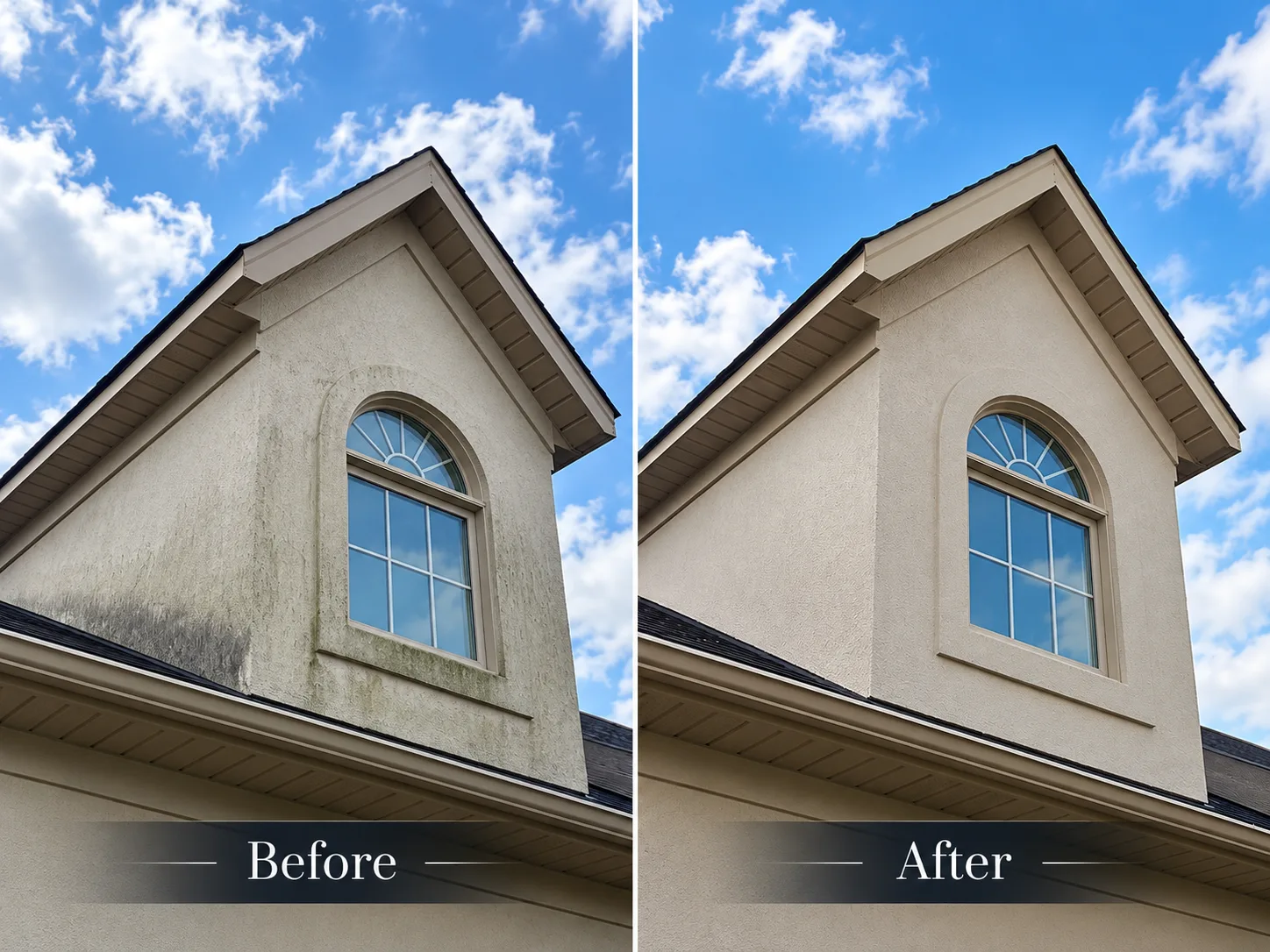
We are repairing more and more dormers across Southwest Florida that have turned green and black with algae and mold. It is one of the most common stucco problems on Florida homes, and it almost always shows up in the same places: the sides of dormers, the walls beside a roof line, and the area below windows. It looks like dirt, but it is a sign the stucco is staying wet. Left alone, that moisture can damage the stucco and the finish.
Why algae and mold grow on stucco dormers
Algae, mold and mildew need moisture and shade, and Florida gives them plenty of both. Dormers are a perfect spot for them because of where they sit on the roof:
- Roof runoff. Rain runs down the roof and across the dormer's side walls, keeping the bottom of the stucco wet long after the storm.
- Missing or failed flashing. Where the roof meets the dormer wall, flashing should send water away from the stucco. When it's missing or failed, water soaks into the wall instead.
- Clogged or missing gutters. Overflowing gutters splash water back onto the wall.
- Shade and slow drying. North-facing and tree-shaded walls stay damp, and algae grows fastest there.
- Textured finishes. Rough stucco textures hold moisture and spores longer than smooth surfaces.
Why pressure washing makes it worse
High-pressure washing is the most common "fix," and it causes a lot of the damage we repair. It forces water into cracks and behind the finish, can erode the texture, and on EIFS can damage the finish coat and get water into the system. The algae usually comes back within months because the wall is still getting wet. Stucco should be cleaned gently, and the reason it stays wet has to be fixed.
How FESG repairs algae-damaged stucco
On the Fort Myers dormer above, the work was mostly repair, followed by a renovation of the finish. Our process:
- Find the water source. We look at the roof line, flashing, gutters, sprinklers and shade to find out why the wall stays wet. If flashing or gutters need work, we point it out so it's fixed before or during the stucco repair.
- Check the stucco underneath. We tap and press the wall to find soft, hollow or cracked areas. Long-term moisture can loosen stucco from the wall or open cracks hidden under the staining.
- Clean it gently. We use a low-pressure wash with a cleaner made for stucco to kill the algae and mold, then rinse, without blasting water into the wall.
- Repair the damage. Cracked, loose or soft stucco is cut out and rebuilt. On EIFS, damaged layers are repaired with matching foam, mesh, base coat and finish.
- Renovate the finish. We prime and refinish the repaired area out to natural edges, such as the corners of the dormer and the trim bands, so the whole dormer is one even color and texture, using coatings that resist mildew.
Why the whole dormer, not just the stain? Even after cleaning, the stained area is usually a different color from the rest of the wall. Refinishing the full dormer face gives a result that looks original, like the after photo above.
Is it EIFS or traditional stucco?
Algae grows on both. On traditional cement stucco, long-term moisture tends to cause cracking and loose areas. On EIFS, it can soften the finish and let water into the system. The repair method is different for each, so we confirm the system first. Our EIFS vs stucco guideexplains how to tell them apart.
Keeping algae from coming back
- Keep gutters clean and make sure water is directed away from dormer walls.
- Have missing or failed flashing at the roof-to-wall line fixed.
- Trim trees that keep the wall in constant shade.
- Point sprinklers away from the walls.
- Have the stucco gently cleaned when you first see green or black streaks, before they damage the finish.
Seeing algae or mold on your stucco?
Send us a photo of the whole dormer or wall and a close-up of the staining. We will tell you whether it needs cleaning, repair or a full refinish, and what is likely keeping the wall wet. FESG repairs algae-damaged stucco and EIFS on dormers and walls from Bradenton and Sarasota to Fort Myers and Naples.
More stucco guides
Related services
- Stucco repair in Fort Myers - algae-damaged dormers, storm damage and refinishing.
- Stucco repair in Sarasota - cracks, staining and finish matching.
- Stucco repair in Cape Coral - canal homes and block homes.
- All stucco and EIFS services - repair, installation, parging and finishes.